
“The Cloud” Isn’t Floating, It's Sitting On 1,000 Acres
By Toby Hayes, AICP and Andrew Moore, AICP
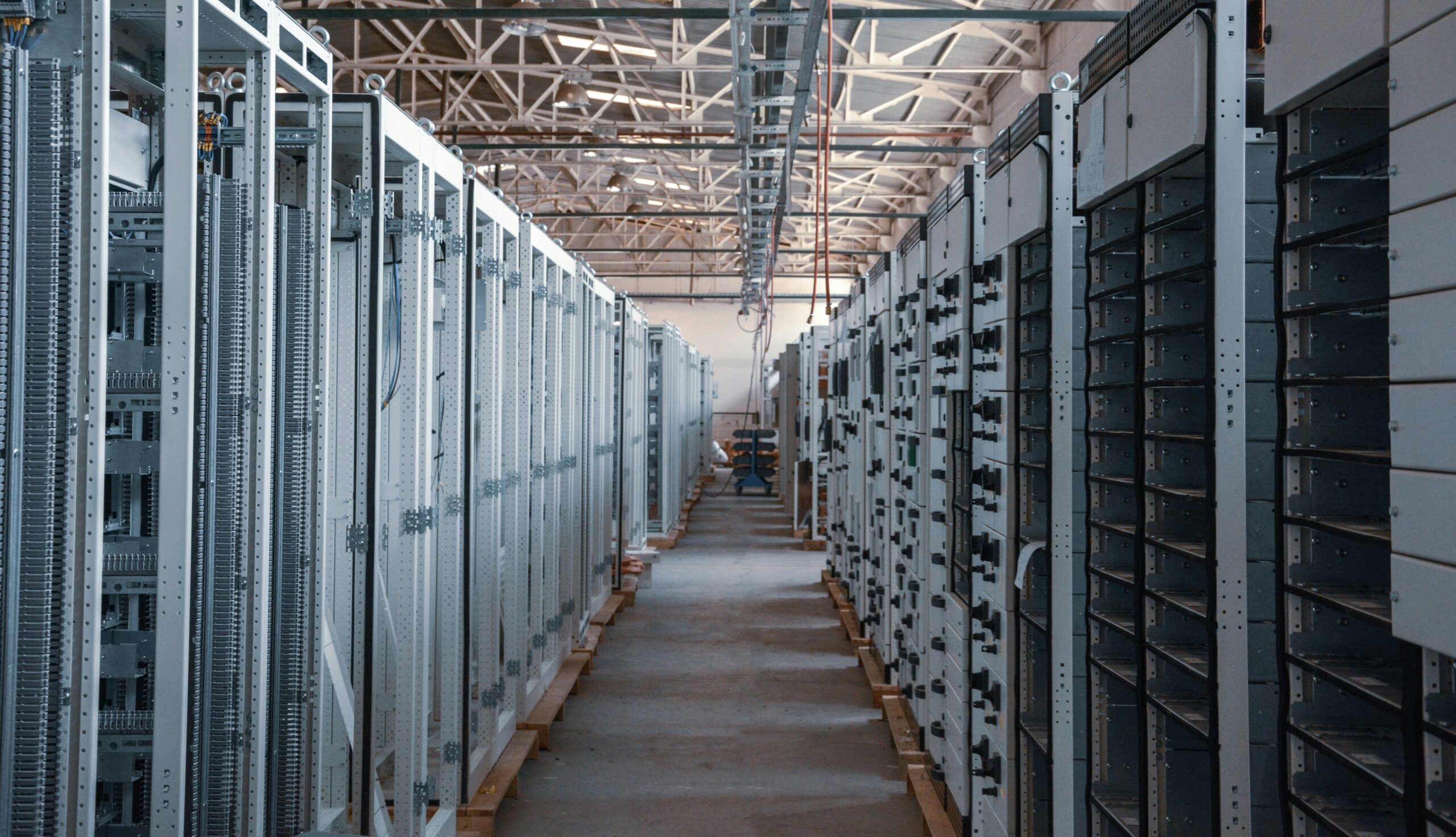
All internet data storage is housed in what are known as data centers; large warehouses containing servers and the network infrastructure necessary to process cloud computing, artificial intelligence (AI), and to keep the internet operational. Data centers have existed in some shape or form since the dawn of modern computing, and Michigan has been home to smaller centers for many years. However, as more industries and consumers begin to utilize AI and rely on the internet for work, school, and everyday life, the demand for cloud computing power has surged, and with it, the need for larger and more data center facilities.
Recent tax incentives from the State of Michigan aimed at attracting data centers to the state have resulted in the planned development of large-scale data centers across Michigan, including several in West Michigan. These recent proposals have entered the public consciousness and raised many understandable concerns regarding their construction and operation, including water and electricity consumption and noise and wastewater pollution. This issue is not limited to Michigan, as communities across the United States are looking for solutions related to data center development.
Where are Data Centers Locating?
Data center developers consider several factors when siting a potential development. These factors include, but are not limited to:
- Availability of high-voltage transmission lines
- Availability of high-speed communications infrastructure (fiber-optic cables)
- Large, contiguous tracts of land
- Municipal water and sewer infrastructure
- Relatively low property tax rates
While data centers can be located in cities with denser development, much of the recent interest has been focused on rural areas. In cities, large tracts of land are often difficult to come by, while rural areas tend to offer more of the five characteristics noted above, making them potentially attractive locations for data center development.
Water Supply Impacts
Computing generates heat, and data centers can require large amounts of water for evaporative cooling in their operations. As such, developers may seek to locate in areas where municipal water and sewer infrastructure is available. Many municipal water supplies are sourced from one or more groundwater wells. The largest hyperscale data centers can consume 5 million gallons of water per day. For reference, the City of Grand Rapids’ Water System, which serves around 280,000 customers, draws an average of 36 million gallons of water per day from Lake Michigan. A hyperscale data center’s daily water usage could therefore be equivalent to that of 38,000 customers, or 13.8% of the Grand Rapids water system’s daily average.
If a groundwater source is utilized, such a drastic increase in groundwater withdrawal brings forth concerns related to the capacity of the aquifer, as most residents of rural townships utilize their own private wells for their potable water supply.
Furthermore, the increase in water usage, along with a corresponding demand for additional infrastructure, creates concern for users connected to a public water supply over increased rates for municipal customers. This can be addressed through agreements or conditions of approval that are placed on data center operators, ensuring the increased costs associated with their development fall onto the developer and not the residents. Determining the precise financial impact can be challenging, and predicting the impact on groundwater resources can also be a difficult undertaking. Communities may need to lean on detailed engineering recommendations in this regard.
Facilities that use evaporative cooling systems will generally consume large amounts of water. Alternatively, facilities could utilize closed-loop cooling systems that use significantly less water, but in turn use more electricity. Communities should consider which is a better option for their needs: low water usage but high electricity usage, or high water usage but lower electricity usage.
Electrical Impacts
Reporting on the impacts on electrical costs have been mixed, with some states reporting increased costs for ratepayers where data centers have been developed and others reporting decreased costs with greater load on the grid. Overall, costs have been increasing for residential consumers across the nation as a result of maintenance to our aging grid and capacity expansion as older analog technologies have been replaced with digital and electrical products. In Michigan, electric customers are subject to “cost-of-service” ratemaking, as established by the Michigan Public Service Commission (MPSC). Essentially, electrical costs are broken down by types of users and shared across those users. This model suggests that commercial rate payers may be impacted by an increased demand by commercial electrical needs, while residential rate payers would not be impacted by data center development. Further, Michigan’s tax exemptions dictate that qualifying data centers (those with greater than $250 million in investment) must pay electrical rates to utility providers that do not result in residential consumers subsidizing data centers.
Pollution
Another concern that has been expressed by members of the public is air or groundwater pollution. While direct impacts on air pollution are generally limited to the point source of the electrical generation, increased electrical demand will result in more fuels being burned and more air pollution as a result. Further, data centers have virtually no downtime, with the most reliable data centers spending a maximum of only around 25 minutes per year offline for maintenance purposes. As a result, most data centers utilize back-up power generation in the event of power outages to ensure reliability. Diesel generators are often employed to ensure reliable power is being generated to keep the data center powered and online. These generators can create noise, vibration, and exhaust that may impact surrounding property owners. Though generators would likely only be used during times of power outages and testing, some noise from the operation of data centers occurs 24 hours per day.
Data centers that utilize evaporative cooling may condition their water with biocides to discourage the growth of bacteria in their cooling systems. These chemicals can be discharged into local wastewater systems, which may not have the technology or capacity to treat them before they are discharged back into our waterways.
Planning and Zoning Implications & Misconceptions
Unlike utility-scale wind, solar, or battery energy storage systems, which have been partially preempted from local zoning authority by Act 233 of 2023, data centers are still fully subject to a Michigan municipality’s zoning authority as of this writing. This is good news for local municipalities, but it also means that communities must work to ensure their master plans and zoning ordinances are reflective of the community’s values, desires, and capacities, and will adequately guide growth and development to areas that are best equipped to accommodate growth. It will be important for municipalities to draft reasonable and defensible ordinances, just like it would for any other land use.
However, municipalities seeking to prohibit data centers must exercise caution, as such an action may be exclusionary. The Michigan Zoning Enabling Act (MZEA) addresses exclusionary zoning by stating that “A zoning ordinance or zoning decision shall not have the effect of totally prohibiting the establishment of a land use within a local unit of government in the presence of a demonstrated need for that land use within either that local unit of government or the surrounding area within the state, unless a location within the local unit of government does not exist where the use may be appropriately located or the use is unlawful.” Therefore, it may be appropriate for a municipality to permit data centers somewhere in the community. Usually, an industrial district is most appropriate, and the special land use process provides the needed discretionary decision-making process and opportunity for public comments.
Many communities have adopted a moratorium that prohibits the submission of any application to construct a data center in the community for a limited period of time, usually 6-12 months. This time can be used to prepare an ordinance that works for the needs and context of the municipality.
Amendments to a zoning ordinance to accommodate data centers should be written to be compatible with the unique needs and characteristics of a community and consistent with its master plan. Special attention should be given to minimizing light, visual, and noise impacts through setbacks and screening. Decommissioning and community agreements may be addressed by the ordinance as well. Communities have broad discretion to regulate land use, and the special land use process can be a useful tool to ensure a transparent process that affords the municipality the discretion to make a decision that aligns with its established ordinances, plans, and policies.